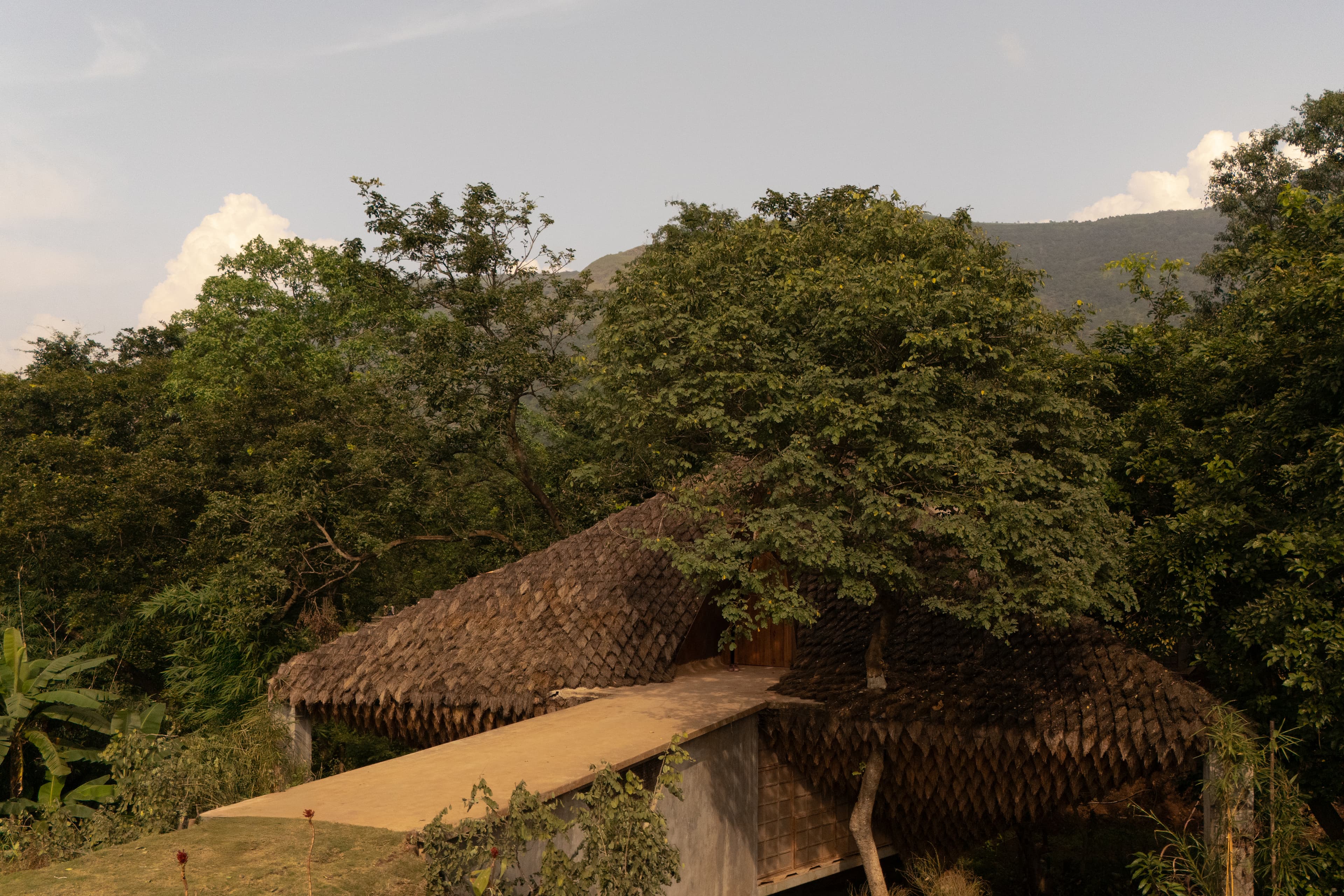
A Place Shaped by Land and Time
EKA did not begin as a hospitality project. It began as a long-held desire to live closer to nature – one that, over time, grew into a commitment.
What exists today is the result of patience rather than ambition: a farmstead shaped by its land, guided by values, and built with care and restraint.
THE LAND
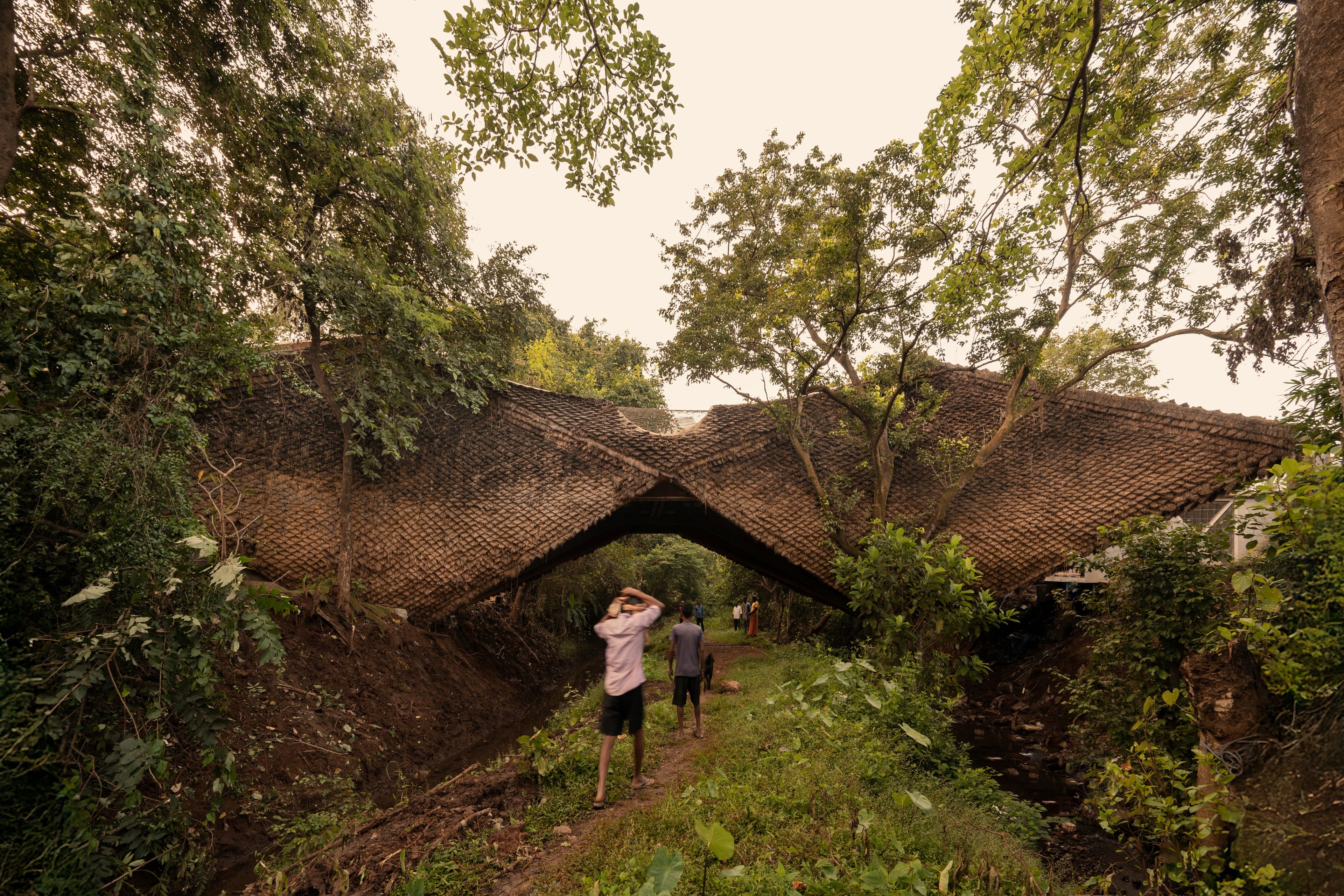
Set in Karjat, at the foothills of the Western Ghats, the land on which EKA stands is raw, uneven, and deeply alive. Forested slopes rise behind it, while a natural stream carves a gorge through the site, shaping both the terrain and the experience.
This land was never meant to be levelled or controlled. Trees were left untouched. Natural contours preserved. Water continues to flow freely beneath the house.
At EKA, the land leads. Everything else follows.
THE BEGINNING
The idea of a farmhouse was written down many years ago — long before there was a location, a design, or a clear vision of what it might become. Over time, exposure to organic farming, time spent in nature, and a growing awareness of how disconnected modern life had become began to reshape that idea.
What emerged was not the desire for a weekend retreat, but for a farmstead — a place that respected ecology, required patience, and encouraged a simpler way of living.
The journey from land acquisition to completion took over a decade, unfolding at the pace the land demanded.
Some places cannot be built quickly. They need time to become what they are meant to be.
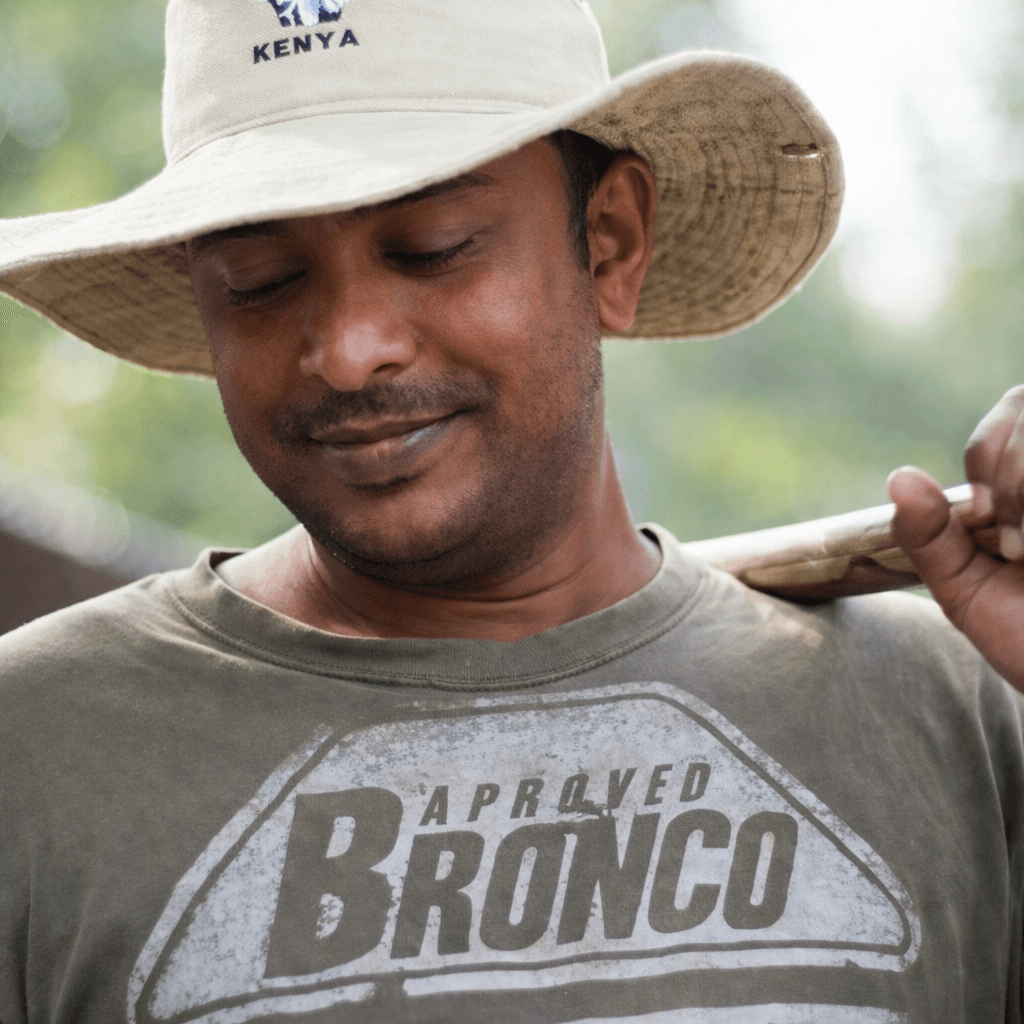
Ashish Shah
Homeowner
THE HOMEOWNER
EKA is owned by Ashish Shah, for whom this land has been a long-standing calling rather than a commercial pursuit.
The desire to build a home close to nature first took shape in his teenage years. What followed was not a straight path, but a slow unfolding — years of learning, waiting, and returning to the idea with deeper understanding each time.
There were moments of uncertainty, and moments when an easier path would have made more sense. What held the project together was a belief that places with integrity cannot be rushed, and that building with the land requires listening as much as doing.
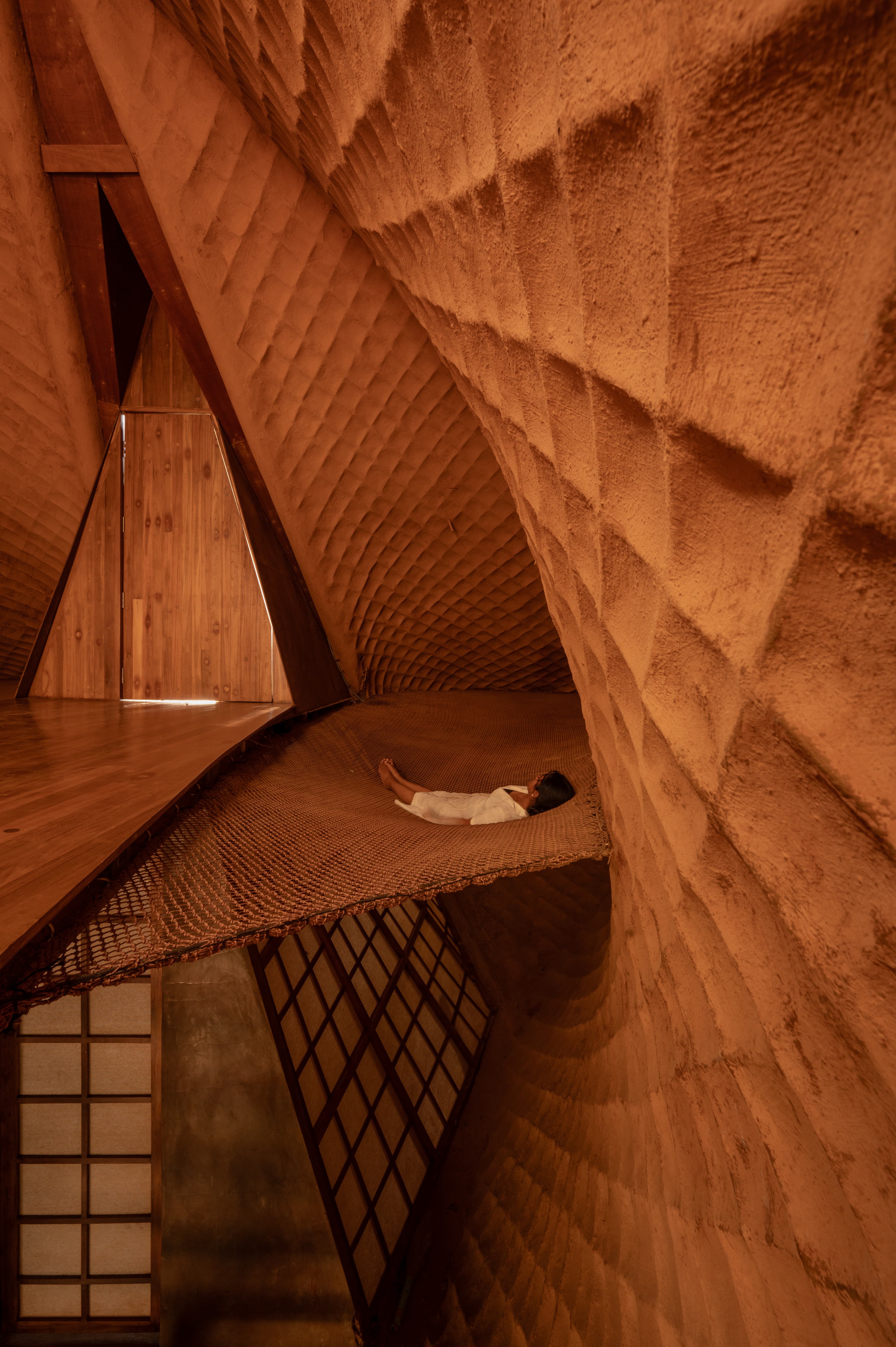
THE BRIDGE HOUSE
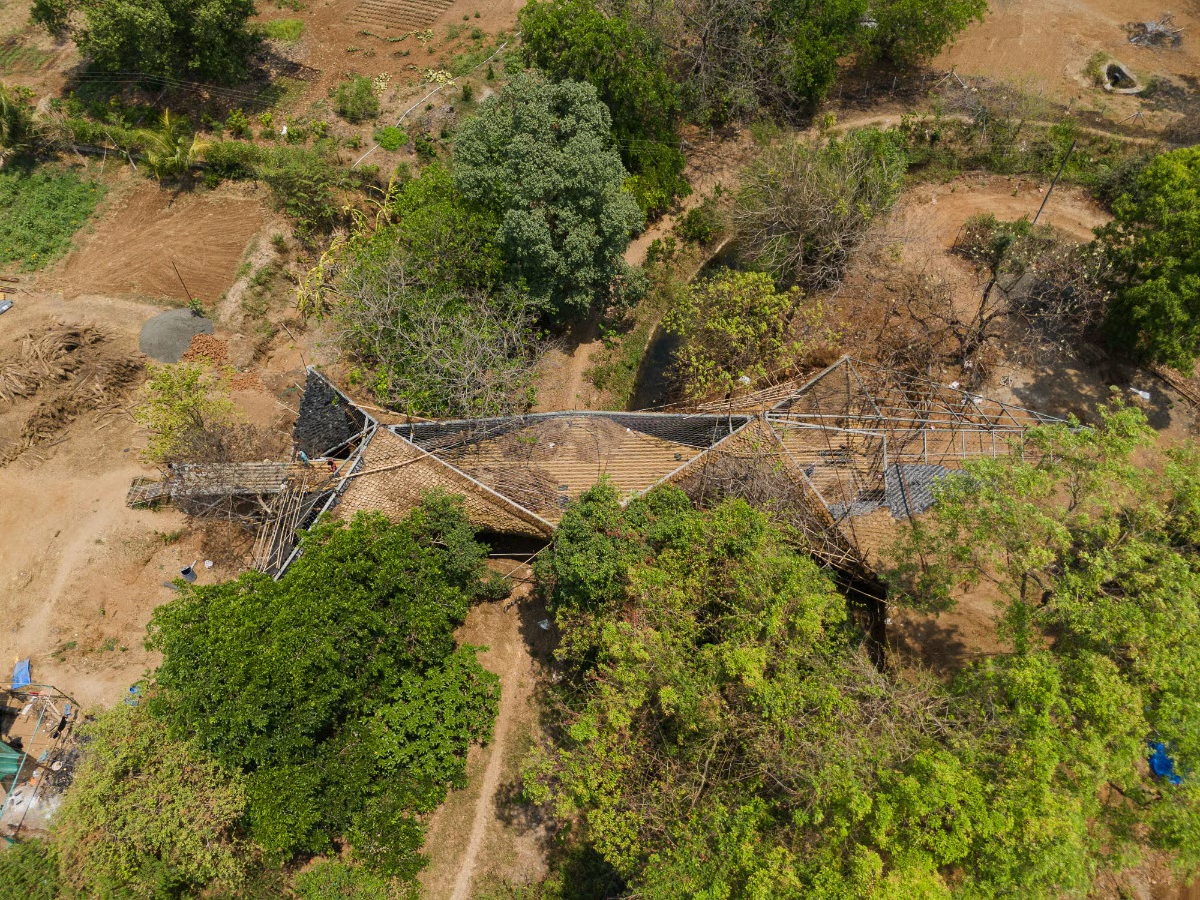
The Bridge House was shaped by the land rather than imposed upon it. Its form follows the contours of the site, responding to water, slope, and forest rather than resisting them.
A natural gorge, carved by a flowing stream, divided the site into two parts. Instead of flattening, filling, or redirecting what already existed, the solution was to span across it — allowing land and water to remain uninterrupted.
The result is a habitable bridge: a linear structure that connects two banks of land while touching the earth at only a few carefully chosen points.